Public Research Record
SPACETIME ENVELOPMENT RESEARCH
Spacetime Envelopment studies how spacetime geometry, light and gravity may relate. It uses theory and computer models to explore the conditions behind specific gravitational effects.
THEORETICAL MODELLING & NUMERICAL TESTING. The project has moved from an early idea to detailed theory and computer testing.
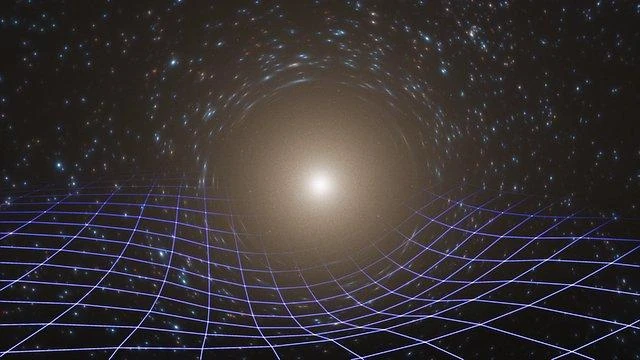
What we’re investigating
Investigating theoretical relationships between spacetime geometry and light propagation.
Conceptual illustration — not research data or an engineering design.
Methods in perspective.
Conceptual visual studies accompanying the public research record. They do not represent findings.
How we’re investigating it
Exploring theoretical gravitational configurations through mathematical and computational modelling.
Conceptual illustration — not research data or an engineering design.
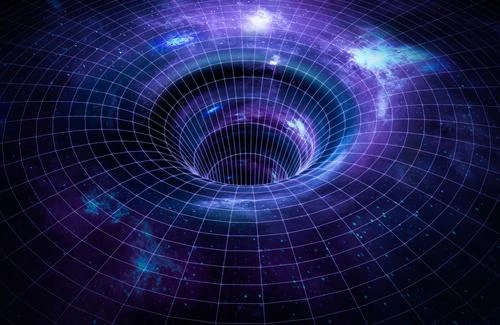
How we’re testing the theory
Testing mathematical consistency, light propagation and physical constraints through successive computational investigations.
Conceptual illustration — not research data or an engineering design.
At a glance / Public record
- Area
- Spacetime Investigation
- Approach
- Mathematics, computer simulations and theory.
- Documented current stage
- The project has moved from an early idea to detailed theory and computer testing.
- Uncertainties & limits
- Research remains active, with several significant questions concerning physical feasibility, model consistency and comprehensive validation still unresolved.
Research activity / Public description
High-level public description of research activity — not completed milestones or actual results.
- Initial conceptual investigation
- Detailed theoretical modelling and numerical testing
- Critical verification; possible model revision or alternative explanations
Overview
Spacetime Envelopment studies how spacetime geometry, light and gravity may relate.
The team tests whether proposed models fit established physical laws and where their limits may be.
How we study it
The project uses mathematical models, computer simulations and theory.
At each stage, the team checks assumptions, physical laws, stability and the limits of the methods. Weaknesses or conflicts may lead to changes, other explanations or stopping an approach.
Current status
The project has moved from an early idea to detailed theory and computer testing.
Questions about whether the ideas are physically possible, consistent and fully supported remain open.
No working technology or physical demonstration has been established.
Public information
This public record shares the programme’s aims, general approach and approved updates.
Detailed theories, equations, experiment ideas, computer models and findings remain private while research and review continue.
LPR Collective research and development | Aotearoa New Zealand